How to Choose Laminates for Wardrobes, Doors and Furniture
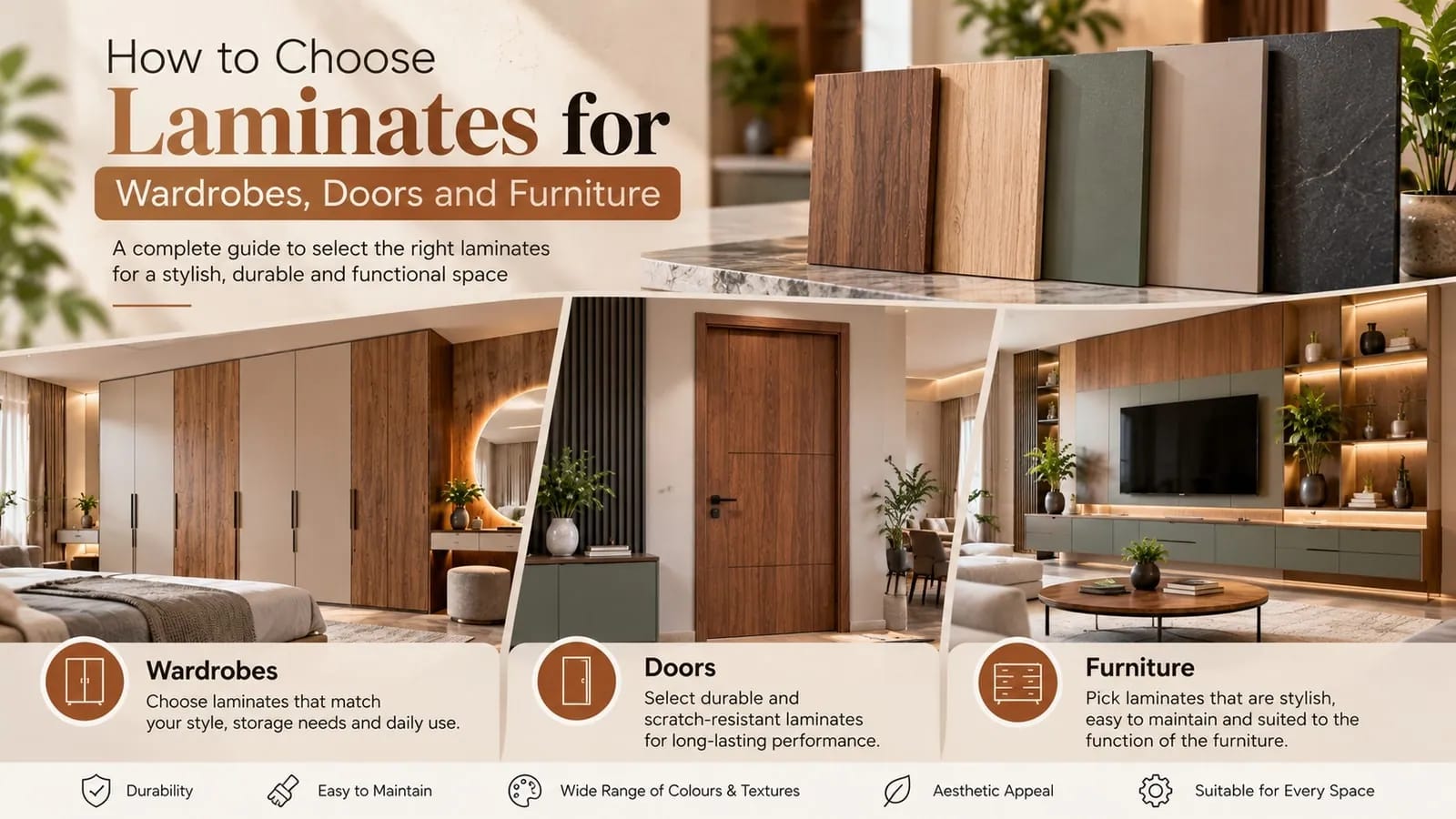
Wardrobes, doors and furniture contribute significantly to the look of an interior. Since these elements often occupy substantial visual space, the laminate you choose can influence the character of the entire room.
The right selection should complement the overall design while being appropriate for the intended application.
1. Choosing Laminates for Wardrobes
Wardrobes offer an opportunity to introduce colour, texture and contrast into a bedroom.
Woodgrain laminates can create a warm, natural-inspired appearance, while plain colours can produce a clean, contemporary look. Combining the two can add variety without making the wardrobe feel visually busy.
Consider the size of the wardrobe, the bedroom's colour palette and the other finishes already present in the space.
For larger wardrobes, viewing the full sheet can be especially useful for understanding how the pattern will appear across the doors.
2. Choosing Laminates for Doors
Doors are often overlooked during material selection, yet they can contribute to the overall visual consistency of an interior.
You may choose a laminate that complements the surrounding walls and furniture or use a contrasting design to give the door a more distinctive appearance.
Woodgrain designs can create a coordinated look with other wood-inspired elements, while plain colours can suit more minimal interiors.
Before finalising a laminate for a door, confirm that the selected product is suitable for the specific door construction and intended use.
3. Choosing Laminates for Furniture
Furniture applications include TV units, cabinets, storage units, desks and other built-in or freestanding elements.
Start with the purpose and visual role of the furniture. A statement piece may benefit from a distinctive pattern or contrasting colour, while furniture intended to blend into the room may work better with a quieter finish.
Consider the surrounding flooring, upholstery, handles and other materials. These details can help you choose a laminate that feels connected to the overall design.
4. Select the Finish Carefully
Glossy, matte and textured laminates create different visual effects. Glossy surfaces are reflective, matte finishes have a softer appearance, and textured options introduce tactile and visual detail.
Your choice should reflect the desired design and the requirements of the application. Also check the product's care instructions and suitability for its intended use.
5. Coordinate Across Different Applications
If wardrobes, doors and furniture are part of the same space, decide whether you want them to match or complement one another.
Using the same laminate throughout can create continuity. Combining coordinated woodgrain and plain colours can introduce variation while maintaining a consistent palette.
Not every surface needs to be identical. A considered relationship between the materials is often enough to make the space feel cohesive.
6. Review Before You Finalise
Compare shortlisted laminates with other materials in the room. Examine the finish, texture, colour and full-sheet appearance wherever possible.
Most importantly, confirm the product specifications for the intended application instead of assuming that every laminate is suitable for every surface.
Find the Right Laminate for Your Application
From wardrobes and doors to furniture and cabinetry, laminate selection is an opportunity to bring the different elements of an interior together.
Explore the laminate collections at Club Studio to find colours, patterns and finishes suited to your design.